
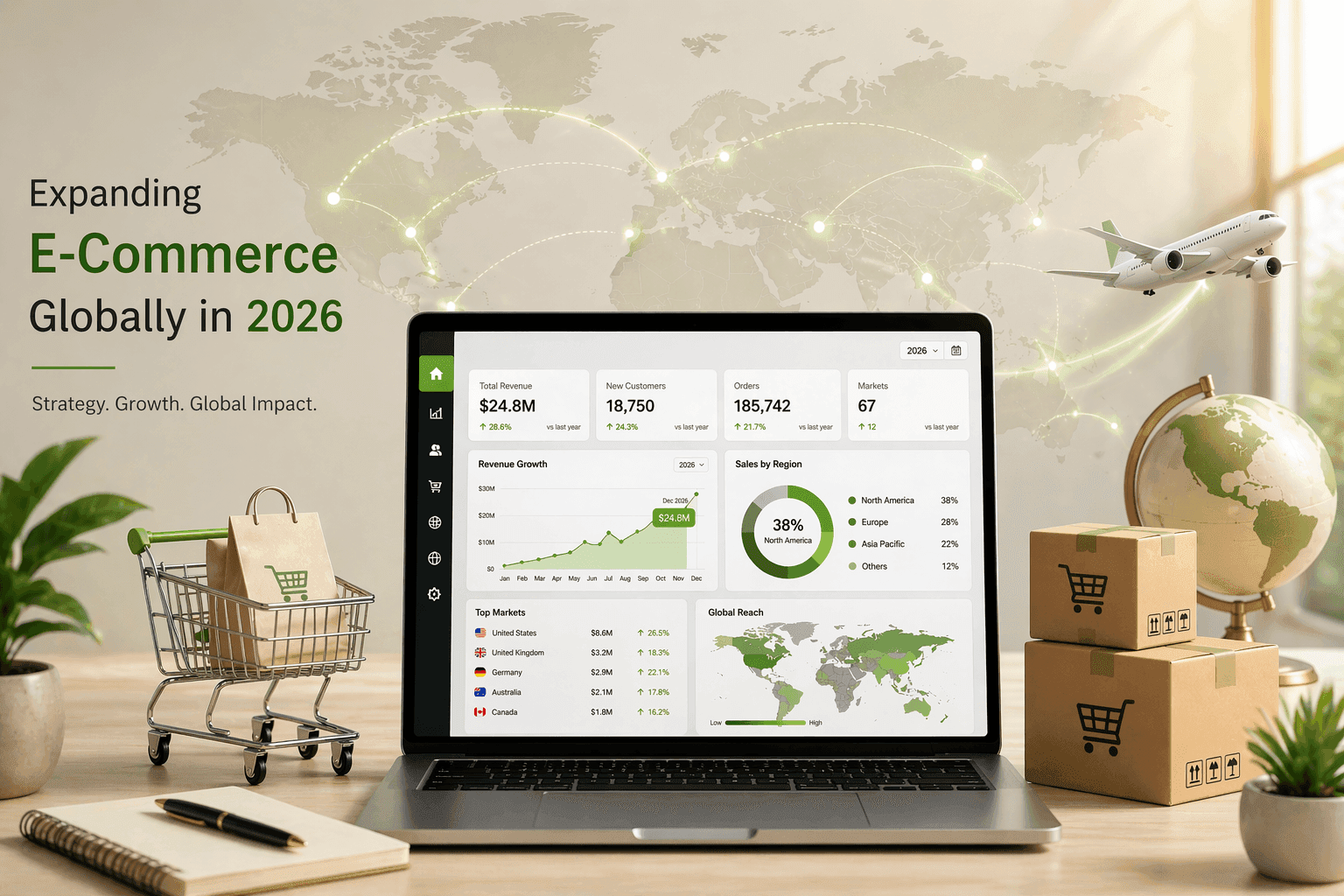
How to Expand Your E-commerce Business Globally in 2026
A strategic overview of international e-commerce expansion in 2026, covering market selection, localization, global payment systems, logistics, compliance, and marketing approaches to help businesses scale efficiently in global markets.
Imagine your e-commerce brand thriving in local markets but you know there’s potential for more. What if 2026 is the year you genuinely connect with customers worldwide, build trust across borders, and watch your business scale globally, not just locally? This guide walks you through international e-commerce expansion without jargon or overwhelm. If you’re ready to unlock new markets, understand cultural nuances, and confidently sell products globally online, you’re in the right place.
Why International E-commerce Expansion Matters in 2026
Expanding your online business beyond domestic borders is more than “getting bigger.” It’s about meaningful growth embracing diversity, tapping into emerging trends, and finding new customers who genuinely value what you offer. Maybe you’ve seen brands like Gymshark or Allbirds break into new territories, adapting their messaging and products for audiences far from home. The practical rewards? A resilient business, more revenue streams, and a deeper understanding of global lifestyles and needs.
From a lifestyle perspective, global e-commerce expansion means your products can brighten routines everywhere. Maybe your skincare brand is solving Japan’s humid summers, or your eco-friendly packaging wins hearts in Scandinavia. The emotional importance is real: you’re connecting with people, not just numbers.
Choosing the Right Markets for Cross-Border E-commerce Growth
One of the biggest factors for global success is where you start. Not every market is the same, and what works in Germany might flop in Brazil. Research is key here-look at local buying habits, shipping distances, economic stability, and cultural preferences.
Use tools like Google Market Finder to compare opportunities.
Study competitors who’ve already succeeded in your target country.
Consider starting with countries where English is widely spoken or where you have personal ties. Then, gradually branch out.
Localization: Connecting Authentically with Global Customers
Going global isn’t just about translating your website. It’s about speaking your customer’s language literally and culturally. This is where the real magic of international e-commerce expansion happens. Localization includes adapting your branding, product descriptions, sizing charts, and even payment methods.
Customize your store’s currency, units (like cm vs. inches), and checkout experience.
Be aware of local holidays and customs; tailor promotions accordingly.
For example, a clothing store entering the UK market may convert all sizes to UK standards, use British English, and reference local events in promotions. In 2026, customers expect real-time, seamless experiences so invest in reliable translation tools and local customer service where possible.
Global Payment Systems and Logistics
Let’s talk nuts and bolts: payment and shipping. Your brand needs to support the preferred payment methods in your target markets. PayPal, Alipay, and local bank transfers can make or break the buying experience. For global e-commerce expansion strategies, partner with payment gateways that accommodate multiple currencies and protect against fraud.
Shipping is equally crucial. Often, customers abandon carts because delivery costs or times aren’t clear. Work with logistics partners who provide transparent tracking and offer local fulfillment centers if demand justifies it. In 2026, reliable logistics will set you apart from competitors who struggle with cross-border e-commerce growth.
Clarify shipping times and costs at checkout.
Offer multiple payment options to reduce friction.
Compliance, Taxation, and Legal Considerations
Nobody loves paperwork but legal compliance is vital for expanding online business globally in 2026. Different countries have different rules around consumer rights, taxes, privacy, and product safety. Brush up on local VAT/GST laws, data protection regulations, and import/export requirements. Work with legal experts when scaling up. Authority comes from being reliable, so don’t cut corners here.
Countries like the European Union have strict privacy laws (GDPR), while Latin American markets often demand detailed tax registrations. Providing trustworthy service starts with staying up-to-date and transparent about fees, returns, and warranties.
International Marketing Approaches That Work
Don’t assume your domestic marketing will translate internationally. Social channels, influencer choices, and cultural references vary wildly. Get to know local platforms maybe TikTok rules in Vietnam, while WhatsApp is king in India. Develop marketing content that feels customized and authentic for each market. Partner with local creators to build trust and credibility.
Test campaigns in small segments before rolling out widely.
Track analytics to adjust messaging as you learn.
Global e-commerce expansion strategies thrive on data and local feedback, so don’t shy away from experimentation.
Buying Guide: What to Check Before Going Global
If you’re picking platforms, tools, or fulfillment partners to help sell products globally online, here’s a quick checklist:
Quality & Support: Does your partner offer reliable support in multiple languages?
Sustainability: Are your packaging, shipping, and sourcing eco-friendly for diverse markets?
Scalability: Will your solutions grow with you as you expand online business globally in 2026?
Choose trusted, widely-used partners and try out demos before committing.
Conclusion: Ready to Expand Your E-commerce Business Globally?
International e-commerce expansion is an adventure sometimes challenging, always rewarding. By focusing on local needs, staying legally compliant, and adapting your marketing, you’ll build genuine relationships and stay ahead of industry trends. Take the next step: map your strategy, research your target markets, and invest in localization for lasting cross-border e-commerce growth. Your brand is capable of connecting with shoppers everywhere, and now more than ever, the world is ready for what you offer.
Curious where to start? Begin with one international market and let your global journey shape your next chapter.
Frequently Asked Questions
Key strategies for international e-commerce expansion in 2026 include selecting the right international markets, tailoring products and services to local preferences, optimizing global payment systems, and ensuring efficient logistics and compliance with international laws.
To effectively expand your online business globally in 2026, focus on identifying growth markets, localizing your content and products for different languages and cultures, and streamlining cross-border logistics while ensuring compliance with local regulations.
Localization is crucial in cross-border e-commerce growth as it involves adapting product offerings, marketing, and communications to meet the cultural and language preferences of each target market, thereby increasing customer engagement and conversion rates.
Essential global e-commerce expansion strategies for selling products online include leveraging international marketplaces, optimizing search engine visibility globally, offering diverse payment options, and creating targeted marketing campaigns tailored to specific regional audiences.
Global payment systems impact international e-commerce expansion by providing seamless and secure transactions. Offering popular local payment options can enhance customer trust, reduce cart abandonment, and increase sales conversion rates in international markets.
When expanding online business globally in 2026, logistics challenges may include managing international shipping costs, navigating customs regulations, ensuring timely delivery, and dealing with returns efficiently to maintain customer satisfaction and operational efficiency.