
Why Indian Manufacturers Are the Next D2C Powerhouses in 2026
Indian manufacturers are sitting on a D2C goldmine, and most don't know it. Learn how to transition from B2B to direct-to-consumer and capture 3x your current margins.
What if the factory that makes your favourite skincare brand's serum decided to sell it directly to you- at half the price, under its own name?
That's not a hypothetical. It's already happening. And the Indian manufacturers who figure this out in 2026 will own the next decade of consumer commerce.
India's D2C market is projected to hit $61.3 billion by 2027. Most of that value will be captured not by new-age startups, but by the manufacturers who've quietly been building the infrastructure, formulations, and supply chains that power those startups all along.
The question isn't whether Indian manufacturers can go D2C. The question is why so few of them know how.
The Invisible Giant Problem: How Indian Manufacturers Power Consumer Brands Without Getting Credit
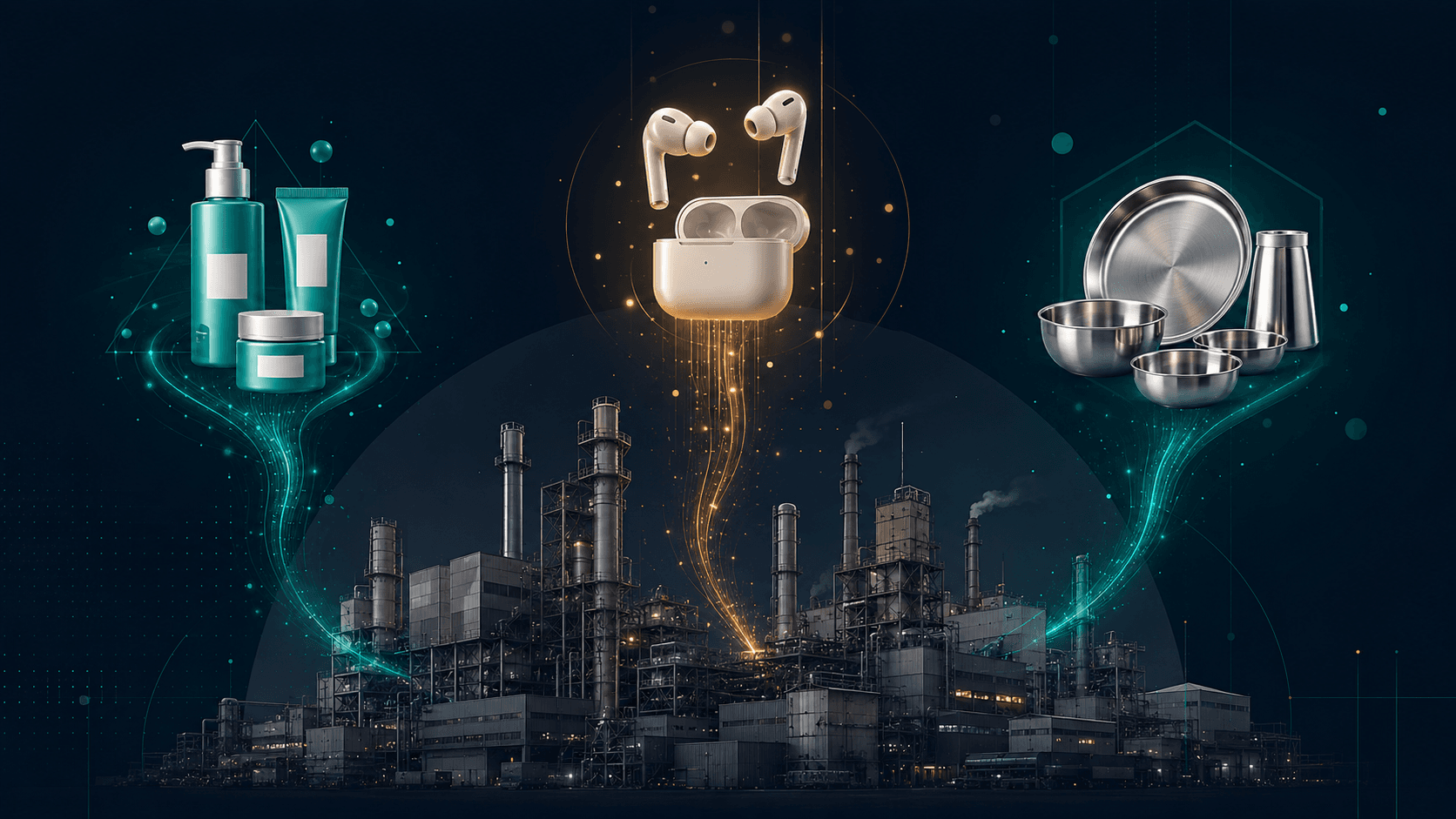
Walk into any Indian home and count the products you use daily, the steel utensils, the protein powder, the moisturiser, the wireless earphones. Someone manufactured all of it. But the brand on the label? Often a company that doesn't own a single factory.
Indian manufacturers have, for decades, been the engine room of consumer commerce, receiving specs, hitting MOQs, shipping to distributors, and watching brands built on their production lines command ₹5,000 crore valuations.
This is the invisible giant problem: world-class manufacturing capability, zero consumer brand equity.
The distributor model made sense in a pre-Internet world. Today, it's a margin trap
What Changed in the Last Five Years in Indian D2C
The D2C window opened for manufacturers because five things converged simultaneously:
Logistics reached every pin code. Shiprocket, Delhivery, and Ecom Express now enable single-unit D2C fulfilment across 27,000+ pin codes. The distribution moat, the main reason manufacturers needed distributors and stockists, no longer exists.
Marketplaces removed the entry barrier. Amazon and Flipkart allow a manufacturer to list products without brand investment or a marketing budget. Meesho opened up tier-2 and tier-3 demand that was previously inaccessible without a physical distribution network.
Digital storefronts became plug-and-play. A manufacturer can launch a Shopify store in 72 hours. What previously required a tech team and six months now requires a weekend.
Consumer trust in provenance grew. Post-COVID, "made in India, by real makers" became a purchasing signal, not just a nationalist sentiment. Consumers want to know where things come from. Manufacturers have that story authentically.
ONDC changed the last-mile equation. The Open Network for Digital Commerce is quietly levelling the playing field, allowing smaller manufacturer-brands to list across buyer apps without being beholden to marketplace commission structures. For hyper-local categories, fresh food, speciality goods, and home essentials. ONDC is a direct channel that didn't exist three years ago.
The Margins Indian Manufacturers Lose Every Day by Selling Through Distributors
Here's what the traditional distributor chain actually looks like for a manufacturer:
Manufacturer (MRP ₹100 cost)
C&FA (+8%)
Stockist (+6%)
Distributor (+10%)
Retailer (+25–30%)
Consumer pays ₹400–600
Manufacturer captures: ₹100–120 (17–25% of consumer price)
Now contrast with D2C via own storefront:
Manufacturer
Own storefront or marketplace
Consumer pays ₹300–350
Manufacturer captures: ₹210–260 (after platform fee + logistics). That's 2.5–3.5x the per-unit margin.
Beyond margin, D2C eliminates the receivables problem endemic to B2B, where payment cycles of 45–90 days are standard. D2C is cash-on-delivery or prepaid. The working capital impact alone is transformational for mid-size manufacturers.
And in an inflationary environment, D2C manufacturers can reprice in real time. A distributor contract locks pricing for quarters. Your own storefront lets you adjust on Tuesday.
Three Indian Brands That Prove Manufacturers Win at D2C: Dixon, Minimalist, and the Tirupur Cluster
How Dixon Technologies Helped Indian Consumer Brands Like boAt Beat the Global Giants
Dixon Technologies is India's largest electronics manufacturing services company, the factory behind products for Samsung, Xiaomi, Panasonic, and others. Dixon didn't itself become a consumer brand. But it proved something more important: Indian manufacturing capability is world-class.
boAt and Noise took that proof point and ran with it. They built consumer electronics brands on the back of Indian EMS infrastructure and created category-defining D2C businesses that now compete directly with the global giants Dixon was originally making products for.
The lesson: manufacturing capability + D2C brand thinking = category ownership. One without the other leaves you either an invisible factory or a brand without a margin moat.
How Minimalist Built a ₹2,955 Crore Brand by Owning Manufacturing From Day One
The Minimalist (now part of the HUL portfolio, acquired for ~₹2,955 crore) launched as a vertically integrated D2C skincare brand with in-house formulation and production control from Day 1. They never had to navigate the B2B-to-D2C transition because they started at the consumer end with manufacturing as a core asset, not an afterthought.
Their pricing power came directly from manufacturing control. While competitors were paying contract labs and building in a 40% margin for the middleman, Minimalist priced clinically, transparently, and aggressively and won a generation of ingredient-conscious consumers.
This is what the D2C model for manufacturers looks like at its best: cost control as a competitive moat, not just operational efficiency.
Tirupur and Surat: How India's Oldest Manufacturing Hubs Are Now Powering Its Hottest D2C Brands
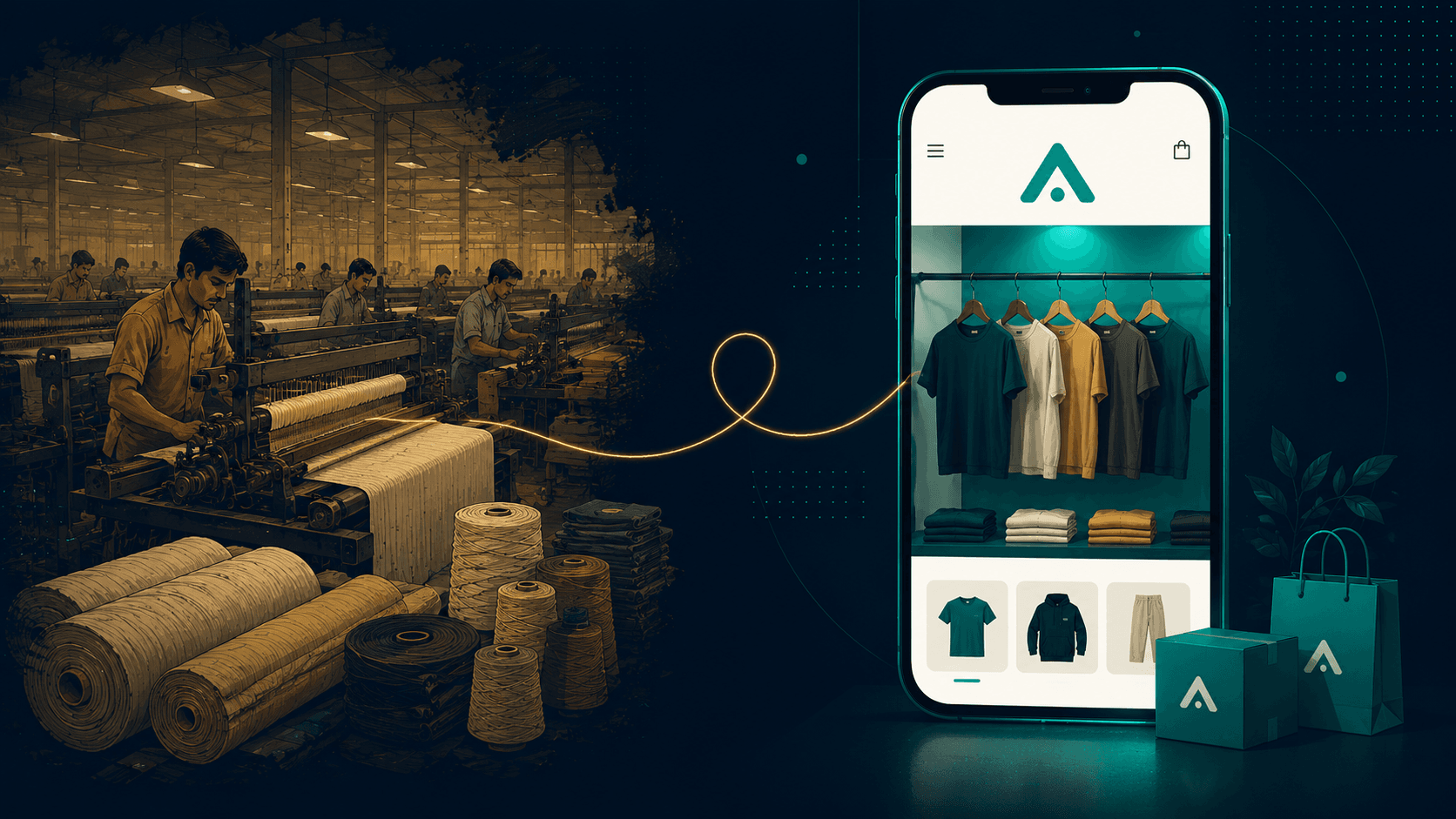
For decades, Tirupur and Surat were India's stitching engines for the world. Tirupur manufacturers produced for H&M, Zara, and Gap. Surat's fabric clusters supplied fast fashion supply chains globally. They were anonymous suppliers with extraordinary craft.
Then came Snitch and The Souled Store brands that built their identity on exactly the kind of Indian manufacturing provenance that Tirupur represents. Fast, affordable, quality Indian casualwear.
The manufacturers in these clusters who made the flip from stitching for foreign labels to building their own consumer brands discovered something powerful: "Made in Tirupur, by people who've been making clothes since 1987" is a story no reseller can replicate. Authentic origin is a brand moat that money can't buy.
How Can a Manufacturer Start Selling Directly to Consumers in India?
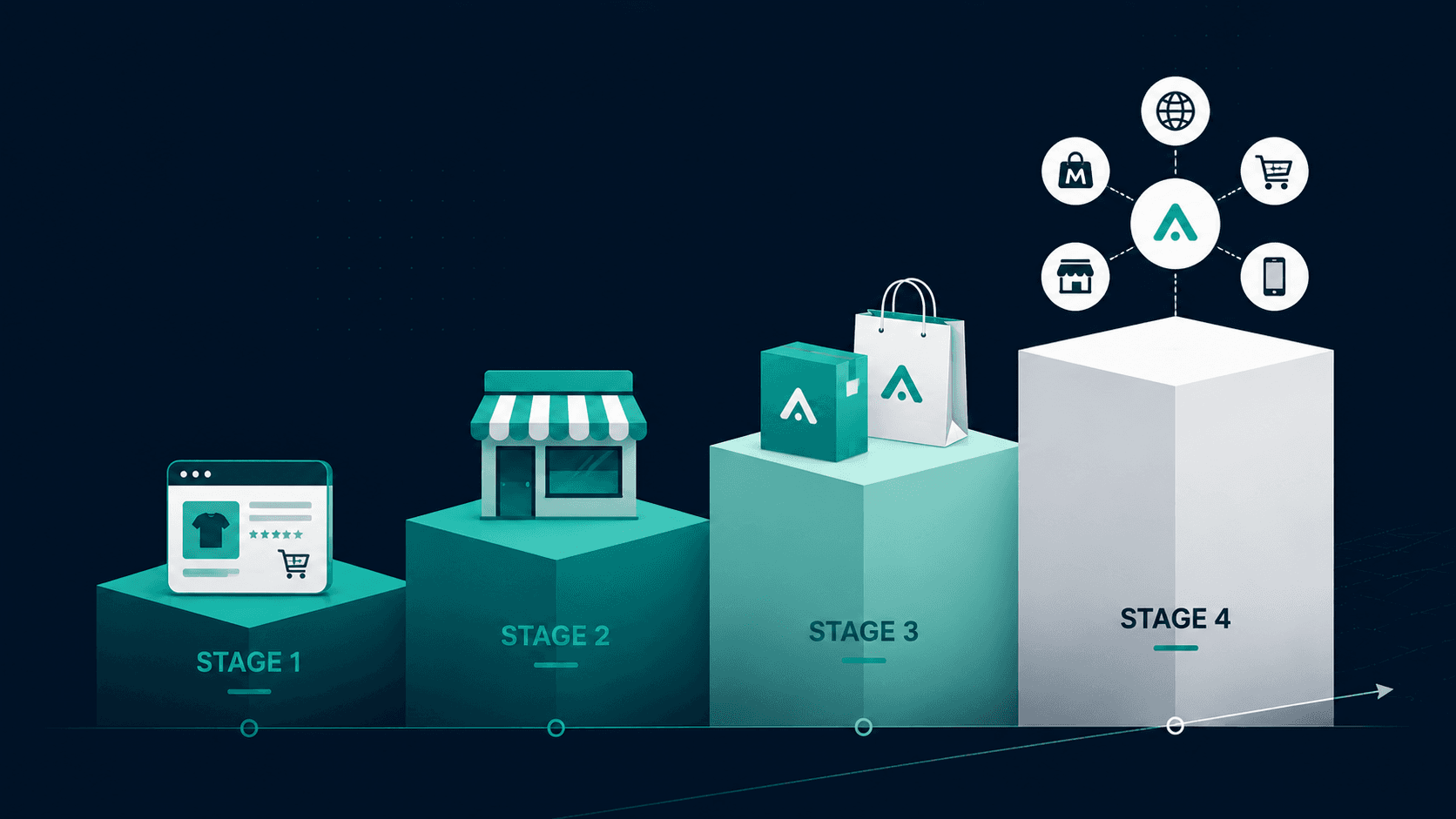
The answer is simpler than most manufacturers expect. The transition happens in four stages:
Stage 1: Marketplace Testing (Month 1–3) List on Amazon or Flipkart under your existing company name or a simple house brand. No marketing spend required initially. The goal is to validate that consumers will buy, at what price, and in which variants. This is your market research, paid for by actual sales.
Stage 2: Own Storefront (Month 3–6) Once marketplace volume confirms demand, launch a Shopify or WooCommerce store. This gives you direct consumer relationships, your own data, and zero platform commission on storefront orders. Start building an email and WhatsApp list from day one.
Stage 3: Brand Investment (Month 6–12) This is where most manufacturers underinvest and lose to pure-play D2C brands. Packaging, naming, storytelling, positioning, these aren't luxuries. They're the difference between a product and a brand. Your manufacturing story is your differentiator. Package it intentionally.
Stage 4: Omnichannel Expansion Quick commerce (Blinkit, Zepto, Swiggy Instamart), modern trade, ONDC, and your own D2C channel running simultaneously. Unified inventory, brand consistency, and margin optimisation across channels.
Can B2B Manufacturers Build Consumer Brands?
Yes. And they have structural advantages that pure-play D2C brands will never have.
A D2C brand built on contract manufacturing is always one supply chain disruption away from a crisis. A manufacturer-brand controls quality, reformulation, cost, and speed-to-market intrinsically. When raw material costs spike, a manufacturer-brand absorbs or passes on the cost without negotiating with a third-party lab. When a product needs to iterate based on consumer feedback, it happens in weeks, not quarters.
The gap isn't capability. It's a mindset. B2B manufacturers think in SKUs and MOQs. D2C brands think in terms of customer lifetime value and brand equity. The transition requires building that thinking alongside the manufacturing muscle you already have, not instead of it.
Your Manufacturing Origin Story Is Your Biggest D2C Brand Moat
The most durable D2C brands of the next decade won't be built by marketers who found a white-label supplier. They'll be built by makers who have finally decided to put their name on what they make.
"Family-owned manufacturer since 1994" is not a liability in 2026. It's a differentiator. Consumer trust is at a premium. Provenance matters. The factory that's been making stainless steel cookware in Rajkot for 30 years has a story no Shopify reseller can tell.
The invisible giants are becoming visible. The manufacturers who move now will define what the next generation of Indian consumer brands looks like.
Not Sure If You're Ready to Go D2C?
Pinnacle Growth Consulting offers a free B2C Readiness Assessment, a structured evaluation of where your manufacturing business stands, what D2C channels fit your category, and what it would actually take to transition.
No pitch. Just clarity on whether and how the D2C move makes sense for your business.