
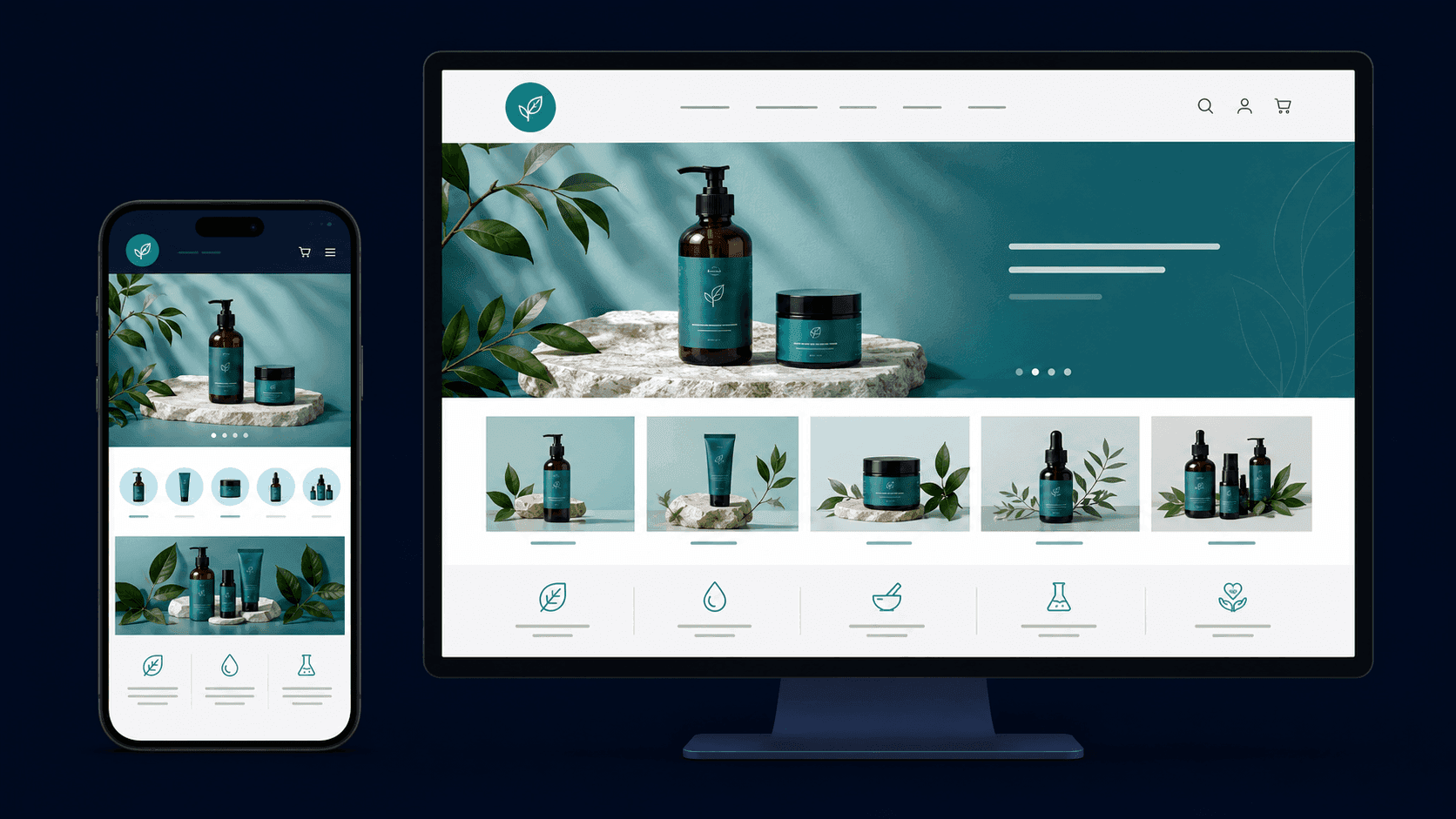
Amazon Brand Store Design: How to Turn Browsers into Buyers in 2026
Most Amazon Brand Stores don't convert because they're generic and unoptimised. Learn the 4 design principles Indian brands use to turn store visitors into buyers in 2026
Most Amazon Brand Stores are wasting the best real estate on the platform.
You have a dedicated microsite inside Amazon. No competitor ads. No distractions. Every visitor who lands there sees only your products. And most brands greet them with a banner that says "Welcome to [Brand Name]" and a page full of every SKU they've ever listed.
That is not a brand store. That is a catalogue nobody asked for.
The brands converting on Amazon in 2026 are using their Brand Store as a strategic asset, not an afterthought ticked off during onboarding. Here is what they are doing differently.
What Is an Amazon Brand Store and Why It's Your Highest-Value Real Estate on the Platform
Before the design principles, the context. An Amazon Brand Store is a free, multi-page microsite available to all brand-registered sellers. It comes with a custom URL (amazon.in/stores/yourbrand), support for multiple pages, rich media including video and lifestyle imagery, shoppable product tiles, and a built-in insights dashboard.
The single most valuable feature: no competitor sponsored ads appear on your Brand Store pages. On a standard product listing, a competitor can run a Sponsored Products ad directly below your buy box. On your Brand Store, that cannot happen. Every rupee of attention belongs to you.
Most brands activate their store because Amazon prompts them to. They upload a logo, add their products, and move on. The result is a page that gives visitors no reason to stay, browse, or buy, and a conversion opportunity that disappears with every click away.
Why Most Amazon Brand Stores in India Fail to Convert and What's Actually Going Wrong
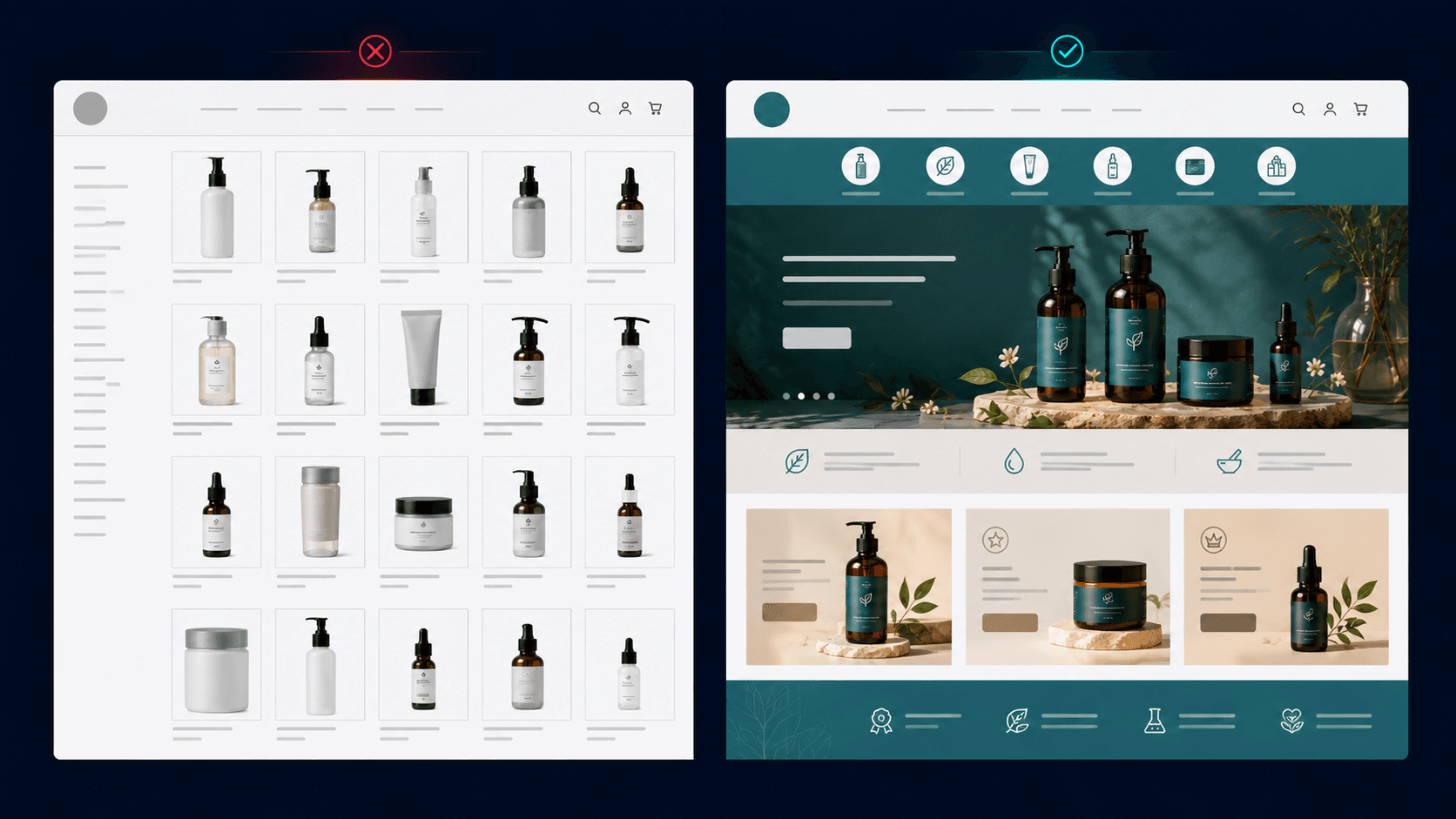
The problem is almost always the same regardless of category.
A homepage with a hero banner that communicates nothing. All products listed on a single page with no logic or hierarchy. White background product images copied directly from listings. No brand story, no value proposition, no reason to choose this brand over the next one in search results.
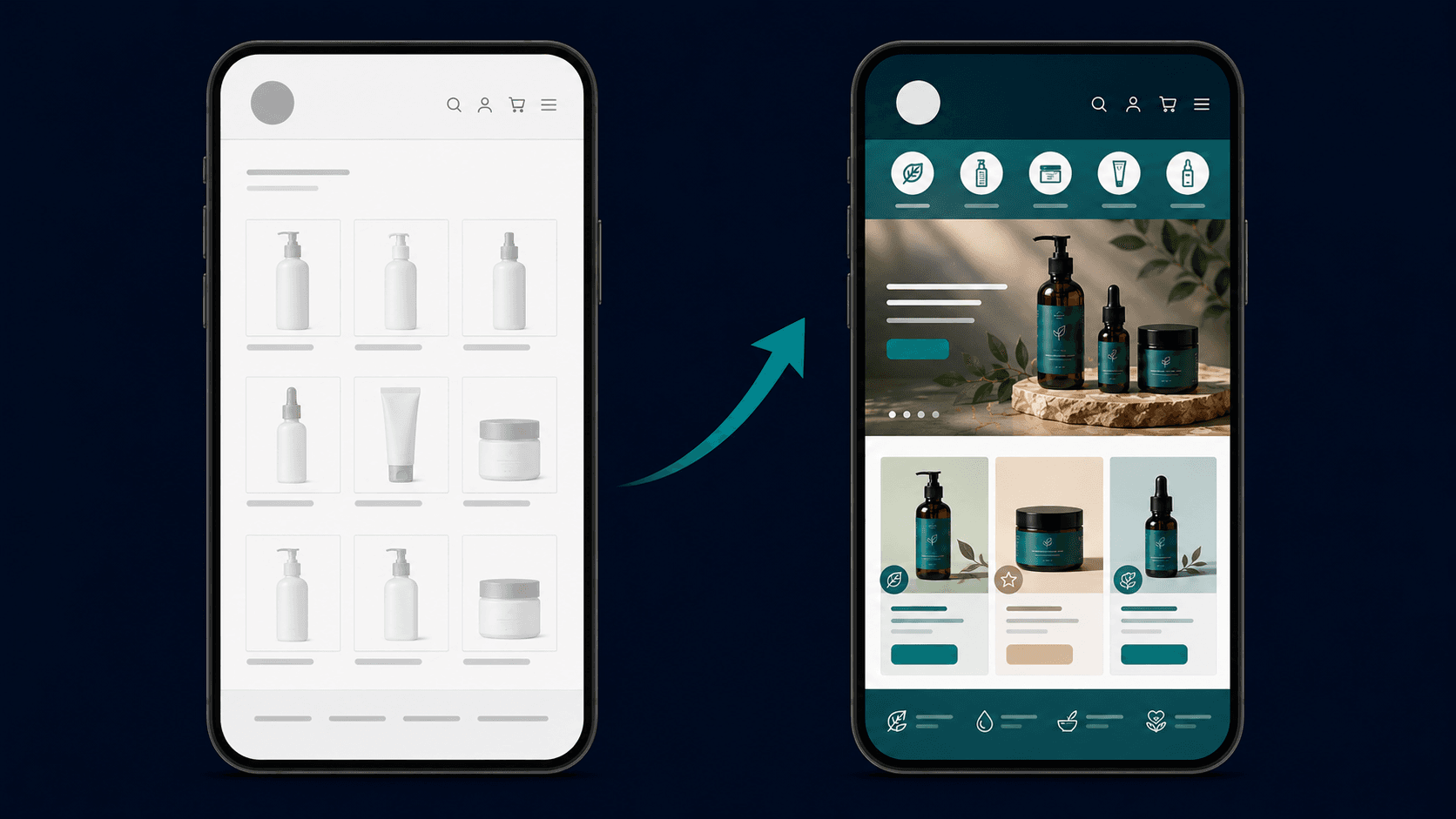
And critically, a desktop-designed store that breaks on mobile. Over 70% of Amazon India's traffic comes from mobile devices. A store with misaligned tiles, unreadable text, and oversized banners on a phone screen is losing the majority of its visitors before a single product is even seen.
A generic Brand Store is a worse version of a category search page. The visitor can find the same products faster by searching directly. There is nothing to stay for.
The 4 Amazon Brand Store Design Principles That Drive Conversions for Indian Sellers
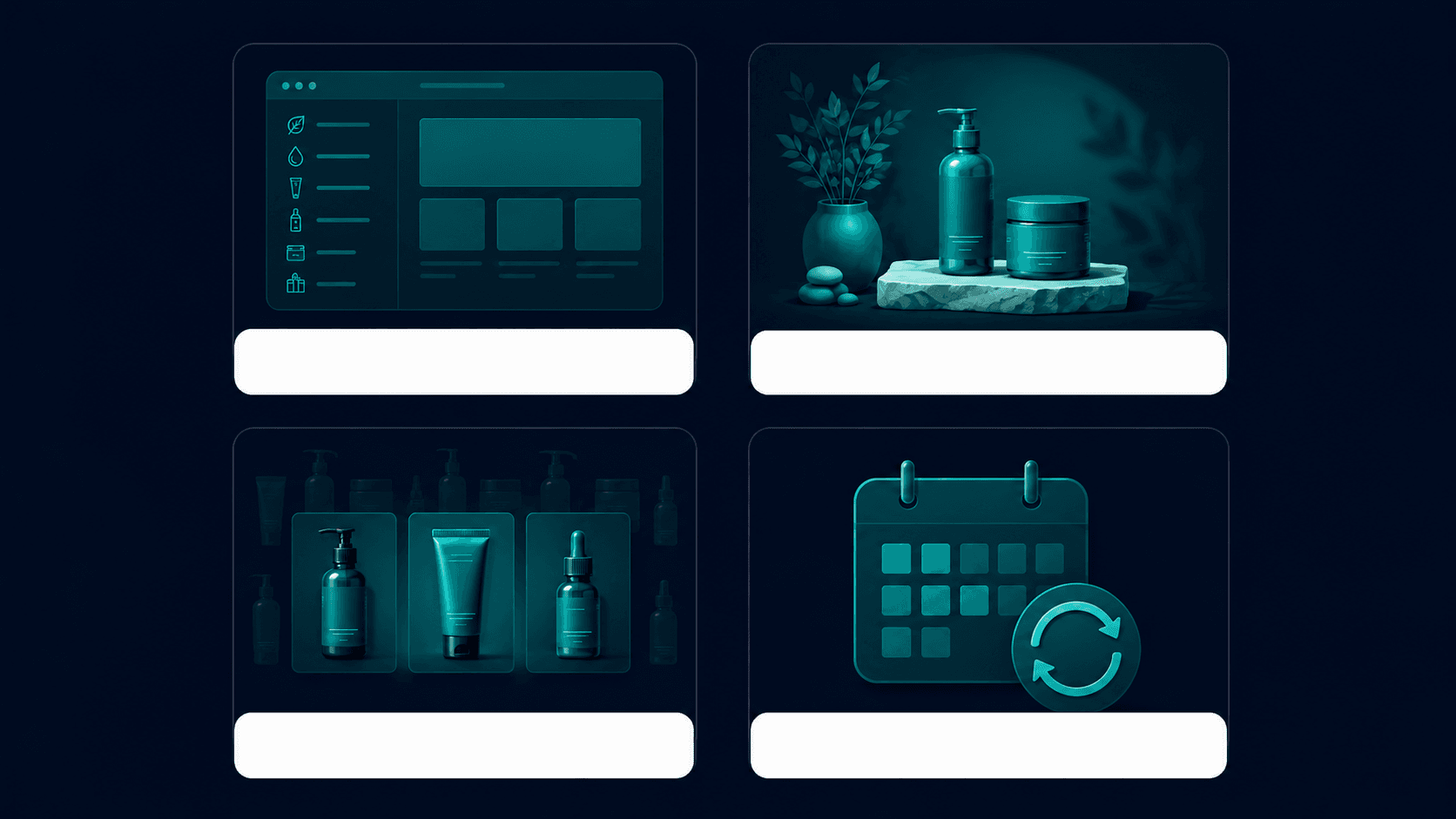
Design Principle 1: Organise Your Amazon Brand Store Around Buyer Intent, Not Your Catalogue
The most common Brand Store mistake is organising pages around what the brand sells rather than what the buyer wants.
A skincare brand with 40 SKUs should not have one page titled "All Products." It should have pages titled "For Oily Skin," "SPF and Sun Care," "Bestsellers," and "Gift Sets." A health supplement brand should have "For Muscle Recovery," "For Immunity," "For Women," and "Starter Packs."
Intent-based navigation mirrors how consumers actually shop — by problem, occasion, or outcome, not by catalogue structure. Brands that reorganise their stores around purchase intent consistently see higher pages-per-session and lower bounce rates.
Every page on your Brand Store should answer one question the customer is already asking.
Design Principle 2: Lead with Outcome, Your Hero Banner Should Sell a Result, Not a Name
Your hero banner is your homepage headline. It has three seconds to give a visitor a reason to stay.
"Welcome to [Brand Name]" is not a reason. "Clinically formulated skincare that works in 28 days" is. "India's highest-rated whey protein, now with zero artificial sweeteners" is. The banner should communicate the single most compelling reason to choose your brand, not announce that the brand exists.
The same logic applies to lifestyle imagery throughout the store. The best Brand Stores show the product in use, the result the customer gets, not what the product looks like in a box. A protein supplement store showing athletes mid-workout converts better than one showing a tub on a white background. A bedding brand showing a perfectly styled bedroom converts better than one showing a folded duvet.
Sell the outcome. The product is evidence of it.
Design Principle 3: Feature 3–5 Hero Products on Your Amazon Storefront, Not Your Entire Catalogue
Not all products deserve equal placement. Decision fatigue is real, too many choices presented with equal weight leads to no choice at all.
High-converting Brand Stores lead with 3–5 hero products on the homepage. These are typically bestsellers, products with strong review counts above 4.2 stars, or new launches being pushed for trial. The rest of the catalogue lives in supporting pages, accessible but not competing for the first-impression moment.
Think of your homepage as a physical store window. You don't put every product in the window. You put the three things most likely to make someone walk in.
Pair your hero products with a short, specific reason to buy, a review snippet, a key benefit callout, a "2,000+ sold this month" social proof indicator. Amazon's Brand Store builder supports text overlays on product tiles. Use them.
Design Principle 4: Treat Your Amazon Brand Store as a Living Asset, Seasonal Pages, Sponsored Brands, and Monthly Reviews
A Brand Store set up once in 2023 and never touched is not a brand store. It is a static page slowly losing relevance.
High-performing brands treat their store as a living asset with three recurring touchpoints:
Seasonal pages. Amazon India's festive season, Great Indian Festival, Diwali, Prime Day, drives 4–6x normal Brand Store traffic. Brands with dedicated sale pages featuring curated bundles and hero offers capture that spike. Brands with generic stores miss it entirely. A seasonal page takes two hours to build and can be the highest-converting page on your store for six weeks.
Sponsored Brands integration. Sponsored Brands ads, the banner ads at the top of Amazon search results, can link directly to your Brand Store rather than a single product listing. A consumer who clicks your ad and lands in a curated brand environment converts better than one landing on a standalone listing. Brands running this combination consistently report higher ROAS on Sponsored Brands campaigns.
Monthly metric reviews. Amazon's Brand Store Insights dashboard shows page views by section, sales attributed to store visits, traffic sources, and dwell time. Dwell time is the most telling metric, low dwell time on the homepage means the hero banner and opening section are not working. Most brands never open this dashboard. The ones that do iterate faster and compound their conversion advantage over time.
The Amazon Brand Store Audit Indian Sellers Should Run Before Their Next Campaign
Pull up your Brand Store and answer these four questions:
Does your homepage hero banner communicate a specific value proposition, or just your brand name?
Are your pages organised around what the customer wants to find, or what you want to show?
Does your store look and function correctly on a mobile device?
When was the last time you updated anything on it?
If the answers are uncomfortable, that is the gap. Your Brand Store is one of the few places on Amazon where you control the entire environment. The brands that treat it that way are converting browsers into buyers. The ones that don't are paying for traffic that goes nowhere.
Ready to Redesign Your Amazon Brand Store for Higher Conversions?
Pinnacle Growth Consulting offers a Brand Store Redesign, a complete rebuild of your Amazon storefront with intent-based architecture, conversion-optimised design, mobile-first layouts, and Sponsored Brands integration.
We will tell you exactly what your current store is costing you, and what a redesigned one can do.