
What Is Amazon Ad Dayparting and Why Most Sellers Lose Money
Globally, Amazon sellers lose budget to dead hours and miss peak conversions. Here's what dayparting is, why it matters, and how AI fixes it automatically.
Your campaigns ran through the night. Bids firing at 3 am. The budget is depleted by 10 am.
And by the time your best customers opened Amazon at 8 pm, your ads were gone.
This is the dayparting problem. Most Indian Amazon sellers have never heard of it. All of them are paying for it.
What Is Dayparting in Amazon Advertising and Why Does It Matter?
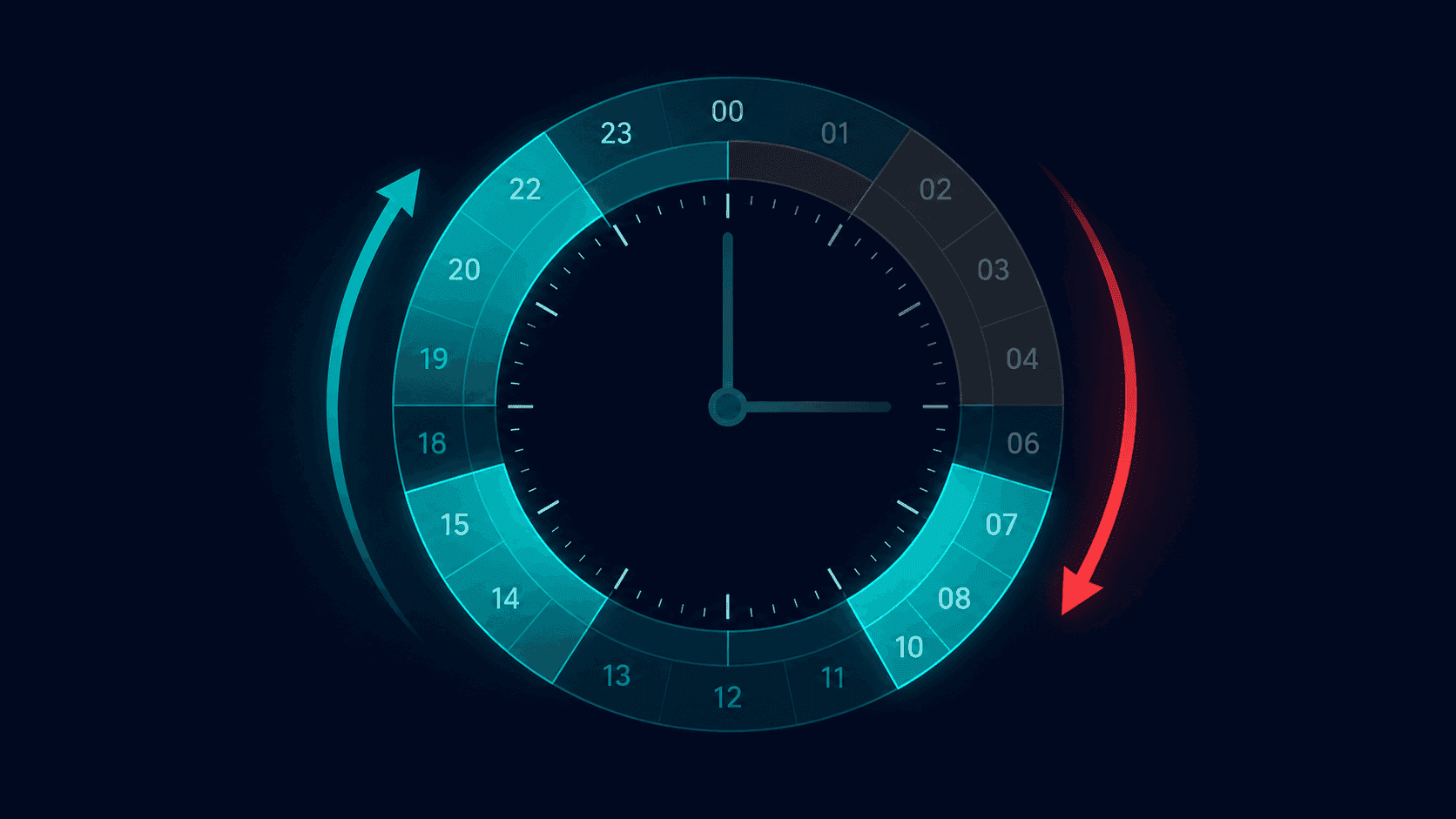
Dayparting is the practice of adjusting your Amazon ad bids, or pausing campaigns entirely, based on the time of day or day of week. The concept comes from broadcast media, where advertisers bought specific time slots when their audience was actually watching. The logic is identical on Amazon: not all hours are equal, and your bids should not treat them as if they are.
In practice, dayparting works through bid modifiers. You increase bids during high-converting windows, when your target customer is browsing with purchase intent, and reduce or pause spend during low-converting windows when almost nobody is buying.
Amazon does not offer native dayparting controls inside Seller Central the way Google Ads or Meta Ads Manager does. There is no "schedule" tab where you set your hours. To daypart on Amazon, you need either a third-party automation tool or someone manually adjusting bids at specific times throughout the day, every day, across every campaign and every ASIN (Amazon Standard Identification Number).
This is exactly why most sellers never configure it. And exactly why it stays as one of the most expensive silent leaks in their ad accounts.
And that is why we built Pinnaclegrowth.ai. It is an AI-powered Amazon Ads automation platform that runs a continuous optimisation loop across your campaigns, 24 hours a day, across 13 Amazon marketplaces. It handles what humans can't sustain, so your ads are always in the right place, at the right bid, at the right hour.
When Do Indian Amazon Shoppers Actually Buy, and When Are You Wasting Your Budget?
Amazon shopping behaviour in India follows a consistent pattern across most categories. Understanding it is the first step to deploying your budget where it actually converts.
Peak conversion windows:
Morning browse (8–11 am) captures commuters and pre-work scrollers, intent is moderate but growing. Lunch break (1–3 pm) drives genuine impulse purchases, particularly in beauty, health, and accessories categories. Evening prime time (7–10 pm) is the highest converting window across almost every category because consumers are relaxed, at home, and actively purchase-ready. Weekend afternoons carry higher basket sizes as family purchase decisions tend to happen then.
Low conversion windows:
The 2–5 am window sees near-zero purchase activity. Early morning, before 8 am, is low-intent browsing. Mid-weekday afternoons (3–5 pm) show suppressed conversion in most categories as working professionals are occupied.
The problem is not that your ads running at 3 am do no good. The problem is that they cost the same as your ads at 8 pm, but convert at a fraction of the rate. Paying uniform CPCs across non-uniform conversion rates is paying full price for a half-empty seat, every single day.
The Three Ways Ignoring Amazon Dayparting Is Draining Your Ad Budget Right Now
Budget Exhaustion Before Your Peak Conversion Window Opens
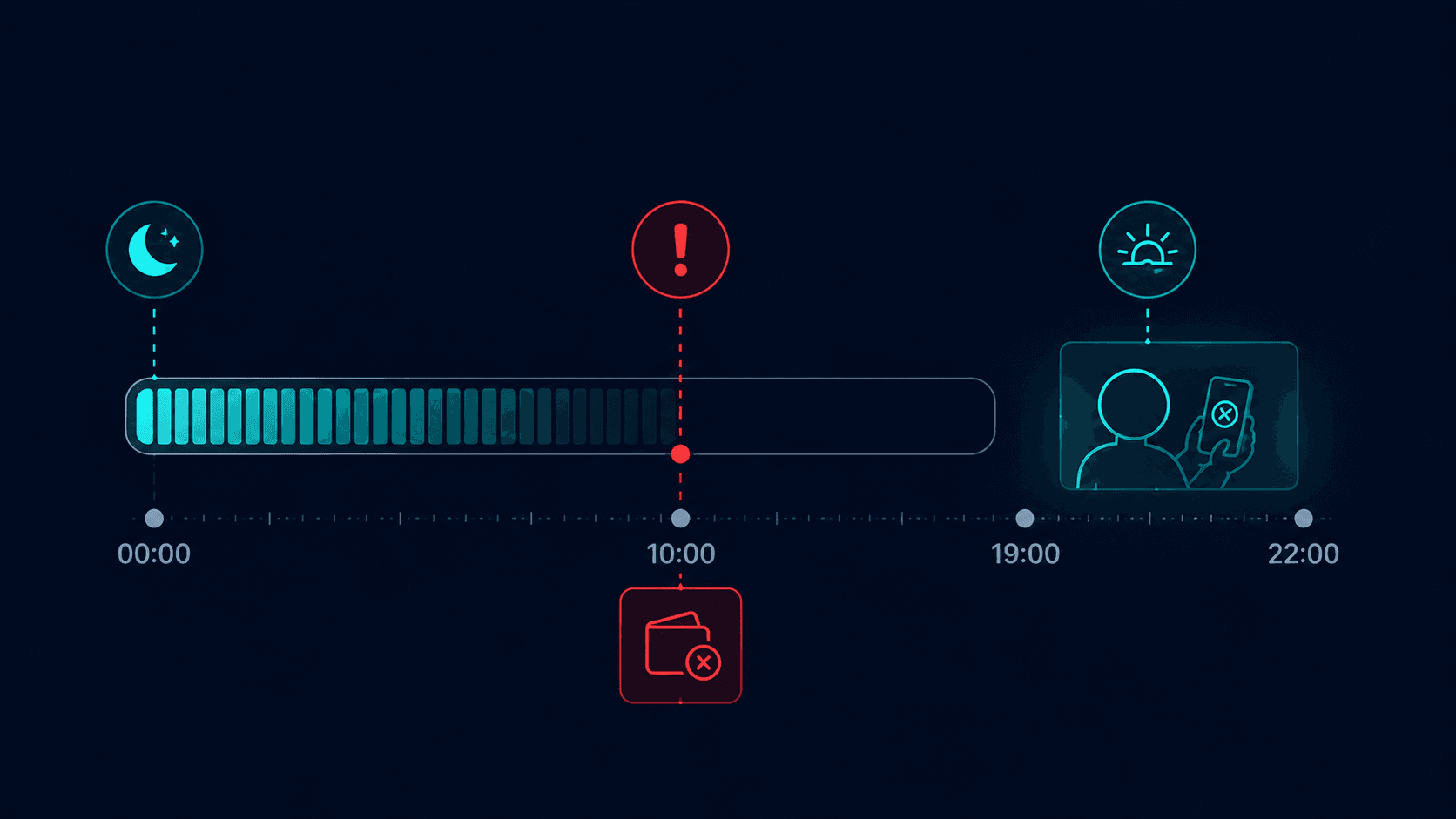
Most Amazon sellers set a daily budget and let campaigns run from midnight. In competitive categories, that budget is exhausted by 10–11 am, sometimes earlier during sale periods or high-competition weeks.
The result: your ads go dark at 7 pm. The hour when your best customer opens Amazon after dinner, searches for exactly what you sell, and finds a competitor instead because your budget ran out nine hours ago.
You did not lose that sale because of a bad keyword or a weak listing. You lost it because your money was already spent on low-intent morning traffic before the evening buyers arrived.
Uniform Bids Across Non-Uniform Conversion Rates
Amazon's ad auction runs 24 hours a day. Your CPC bid is the same at 3 am as it is at 8 pm. But conversion rates across those two windows are not remotely comparable; an evening click in most Indian categories converts 2–3x more often than an overnight click.
What this means in practice: you are simultaneously overpaying for low-quality traffic during dead hours and underpaying for high-quality traffic during peak hours. The ACoS inflation this creates looks like a bidding problem. It looks like a keyword problem. It is neither. It is a timing problem, and it compounds silently every single day without appearing on any report you're likely to check.
Losing Ground to Competitors Who Are Already Dayparting
This is the part that makes the problem urgent rather than merely expensive.
Sophisticated Amazon sellers are already adjusting bids by the hour. During low-competition overnight windows, they pull bids back, saving budget for when it matters. During peak evening windows, they push bids up, winning top-of-search placement at the exact moment conversion rates peak.
Brands without dayparting are making uniform bids against competitors running dynamic hourly strategies. The auction is not equal. Every day without dayparting is a day of being outcompeted at the moments that matter most, by brands spending the same total budget more intelligently.
Why Most Amazon Sellers in India Never Configure Dayparting
The honest industry reality is this: dayparting is rarely configured because doing it manually is operationally impossible to sustain.
Here is what manual dayparting actually requires. Log into Seller Central before each peak window and increase bids across every campaign and every ASIN. Log back in after the peak window and reduce them. Do the same at lunch. Do it differently on weekends. Adjust seasonally as consumer behaviour shifts around festive periods. Repeat this every day, without missing a session, without error, across an account that may contain dozens of campaigns and hundreds of keywords.
No realistic team does this consistently. It requires someone monitoring and acting on ad accounts around the clock, not reviewing them weekly or even daily, but making bid decisions multiple times every single day. The operational cost of doing it manually exceeds the margin benefit for most brands before they even start.
So the problem is known. The fix is understood. And it stays broken because it requires a level of execution speed and consistency that humans cannot deliver at scale.
How Pinnaclegrowth.ai Solves Amazon Dayparting Automatically 24/7, Without Manual Intervention
This is precisely the problem Pinnaclegrowth.ai was built to fix.
The platform's AI automatically adjusts bids by hour and day of week continuously, without manual cycles, without periodic reviews, without anyone needing to log in at 7 pm to push bids up before the evening window. It runs a continuous signal-to-action loop that identifies when conversion rates are rising and adjusts spend accordingly, then pulls back when the window closes.
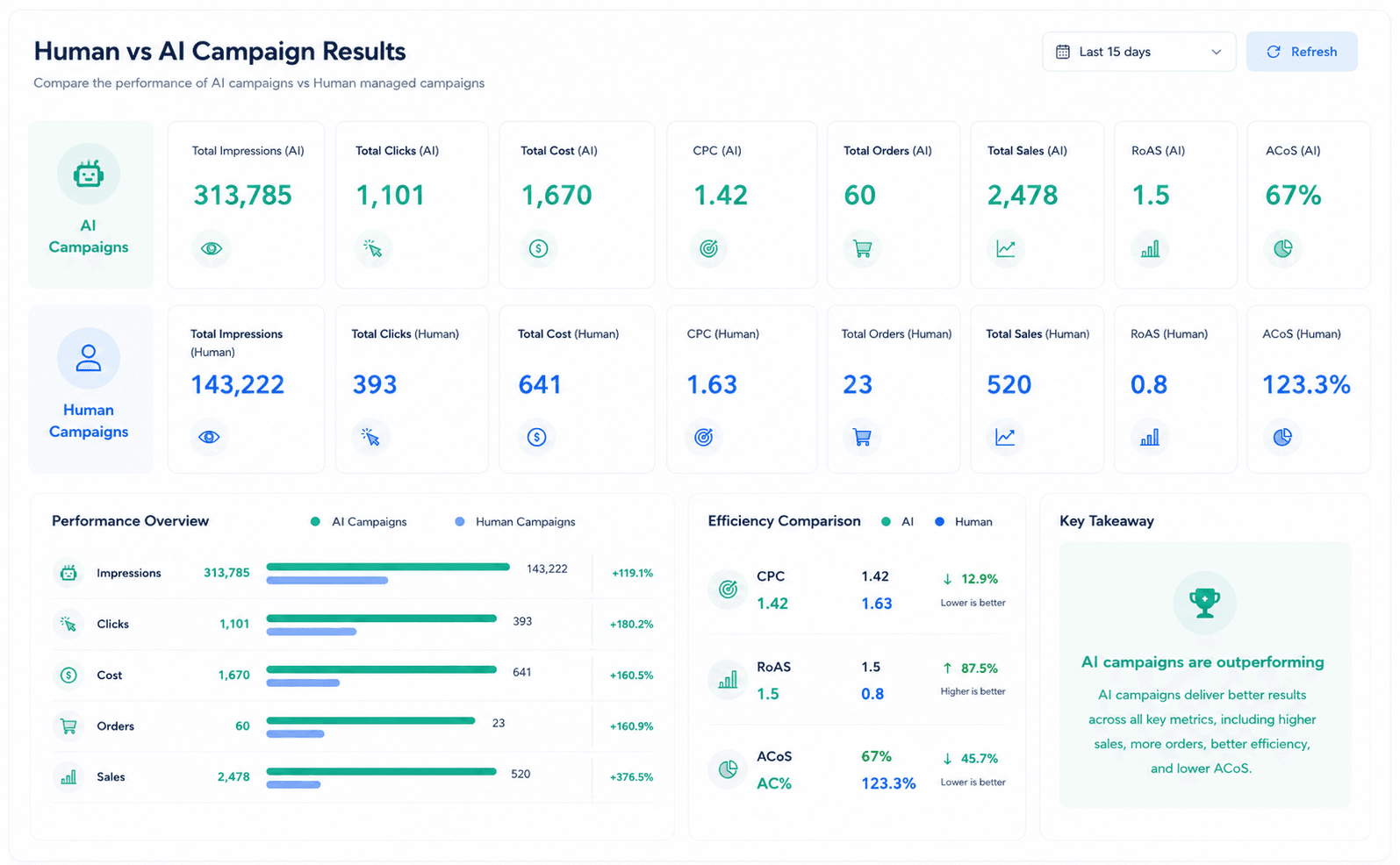
In the comparison between human-managed and AI-managed Amazon campaigns, the dayparting gap is explicit: human-managed means "rarely configured, too time-consuming manually." AI-managed means "automatically adjusts bids by hour and day of week." That is not a marginal difference. It is a structural one.
Dayparting gap analysis is also a named component of Pinnaclegrowth.ai's Amazon AI Audit, identifying exactly which time windows in your account are leaking budget and what the AI does to close those gaps. It sits alongside query waste, bid inefficiency, and campaign architecture as one of the four core areas where most Amazon accounts are systematically losing money.
The fix is not more people or a bigger budget. It is a smarter operating model that never sleeps, one that treats every hour of the day as a distinct bid decision rather than a uniform one.
What Fixing Dayparting Actually Does to Your Amazon ACoS and ROAS
When the budget concentrates on high-converting windows, the mechanics shift in your favour across every metric.
More of your spend lands in front of purchase-ready customers, relevant impressions increase, click-through rate improves, and conversion rate rises because the traffic quality is higher. The same total budget generates more orders because it is no longer diluted across hours where almost nobody converts.
ACoS (Advertising Cost Of Sales) improves without touching a single keyword or listing. ROAS (Return on AD Spend) lifts without increasing spend. And the compounding effect builds over time, as the AI learns your account's specific conversion patterns by hour and category, dayparting decisions become more precise, not less.
This is what the Pinnaclegrowth.ai data shows: AI campaigns outperforming human-managed ones on impressions, clicks, orders, sales, RoAS, and ACoS, not because the keywords were different, but because the execution layer was smarter.
Your Budget Is Spending Right Now. The Question Is Whether It's Spending in the Right Hours.
Dayparting is not an advanced tactic for brands with enterprise ad budgets. It is a basic efficiency lever that most Indian Amazon sellers are not using because the manual execution is impossible to sustain, and Amazon does not make it easy.
The brands that solve this problem stop paying for hours that don't convert and start winning the hours that do. The ones that don't continue funding the gap between what their campaigns could return and what they actually do.
Book a Live Demo with Pinnaclegrowth.ai, and we will show you exactly where your dayparting gaps are, what your budget is doing hour by hour, and what the AI does automatically to fix it.
No pitch. A live walkthrough of your account's time-based spend patterns and what an AI-managed system does differently.