

The Seller's Complete Playbook for Selling on Amazon India
Have you ever walked across your bustling factory floor, looked at the incredible volume of high-quality goods rolling off the assembly line, and recognized the massive, untapped potential sitting right in front of you? You certainly are not alone.
Across the country, brilliant business owners have mastered the complex art of production. You know exactly how to source premium raw materials, optimize assembly lines, and manage massive supply chains. But when it comes to the digital storefront - when you sit down at your desk and search for how to sell on Amazon - the process suddenly feels like deciphering a completely foreign language.
It is a specific roadblock seen across the industry every single day: Manufacturers have products but no idea how to set up and optimize Amazon accounts. You have the inventory, the infrastructure, and the margins, but the bridge between a physical warehouse and a digital shopping cart feels endlessly complicated.
That disconnect is exactly why this guide exists. We want to demystify the platform and give you a clear, actionable roadmap. Whether you are looking to clear excess inventory or build a legacy brand, this is your definitive playbook for conquering the marketplace.
The Great Transition: From B2B Manufacturing to D2C Dominance
Before diving into the technical setup, we need to address the most common question traditional business owners ask: Is Amazon worth it for Indian manufacturers?
The short answer is an absolute, undeniable yes.
For decades, the traditional manufacturing model relied on a long, margin-eating supply chain. You built the product, sold it to a distributor, who sold it to a wholesaler, who sold it to a retailer, who finally sold it to the end consumer. By the time your product reached the user, your original profit margin had been sliced to fractions, and you had zero direct relationship with the person actually using your item.
The modern e-commerce landscape changes all of that. Transitioning your business model from OEM to Amazon brand is one of the most lucrative strategic moves a factory can make in today's economy. By selling directly on Amazon India, you eliminate the middlemen. You capture the retail markup for yourself, drastically improving your unit economics.
More importantly, you begin building brand equity. When you rely solely on B2B orders, your business is invisible to the public. When you launch on Amazon, you transition from being a nameless, faceless supplier to a recognizable consumer brand. You gain direct access to customer reviews, market trends, and search data, allowing you to iterate and improve your products faster than ever before.
The Foundation: Requirements and Your "Check Repository"

So, you have made the decision to digitize. The immediate next question is: What are the steps for a factory to start selling on Amazon?
The very first phase is getting your administrative house in perfect order. Far too many businesses rush this step, leading to account suspensions, blocked listings, or frustrating delays. As a manufacturer, your onboarding process requires a slightly different approach than a standard retail reseller. Think of this as building your "Check Repository" - a centralized digital folder containing every document you will need to prove your legitimacy and protect your intellectual property.
Amazon seller registration for manufacturers begins with these non-negotiable requirements:
1. The Legal and Tax Basics
Just like any business transaction in India, you must have your taxation sorted. Your Check Repository needs to include a pristine, scanned copy of your GSTIN (Goods and Services Tax Identification Number) certificate. Amazon India requires this for almost all categories, as it ensures smooth interstate taxation. Alongside your GST, you will need your business PAN card, a dedicated business email address, and an active bank account in the name of your registered business entity for your weekly disbursements.
2. Brand Registry and Trademark Protection
This is where the transition from factory to Amazon listing becomes crucial. Because you manufacture the products, you have the unique opportunity to protect them. Before you list a single item, you should file for a trademark for your brand name. Once you have your trademark (or even a pending trademark receipt), you can apply for Amazon Brand Registry.
Why does this matter? Brand Registry gives you immense power. It stops counterfeiters from hijacking your listings, unlocks advanced advertising tools, and gives you access to A+ Content (those beautiful, image-rich product descriptions you see on top-tier listings). As a manufacturer Amazon seller India, your intellectual property is your moat. Protect it early.
3. Quality and Compliance Certifications
Depending on what your factory produces, Amazon may gate (restrict) your category to ensure consumer safety. If you manufacture dietary supplements, cosmetics, children's toys, or electronics, your Check Repository must include your ISO certifications, FSSAI licenses, or lab testing reports. Having these PDFs ready to upload before Amazon even asks for them will save you weeks of frustrating back-and-forth with seller support.
Product Decisions: Curating Your Digital Catalog
One of the most common mistakes a factory makes when moving online is the "catalog dump." Because a manufacturer might produce 500 different SKUs for their B2B clients, they assume they should immediately list all 500 SKUs on Amazon.
This is a recipe for disaster. E-commerce requires a surgical approach. You must audit your catalog and make strict product decisions based on consumer demand, shipping realities, and profit margins.
Choosing the "Hero" Products
When selecting which items to launch first, look for your "Hero SKUs." These are products that have a high perceived value, are relatively lightweight, and are not easily breakable.
In the Indian e-commerce market, you must heavily factor in the reality of logistics. Cash on Delivery (COD) remains a dominant payment method, which naturally leads to higher Return to Origin (RTO) rates. If your product is highly fragile or extremely heavy, the forward and reverse shipping costs of a returned item will quickly eat through your profit margins. Start your journey with products that are easy to ship, boast a healthy margin, and solve a clear consumer problem.
Choosing the Right Fulfillment Model
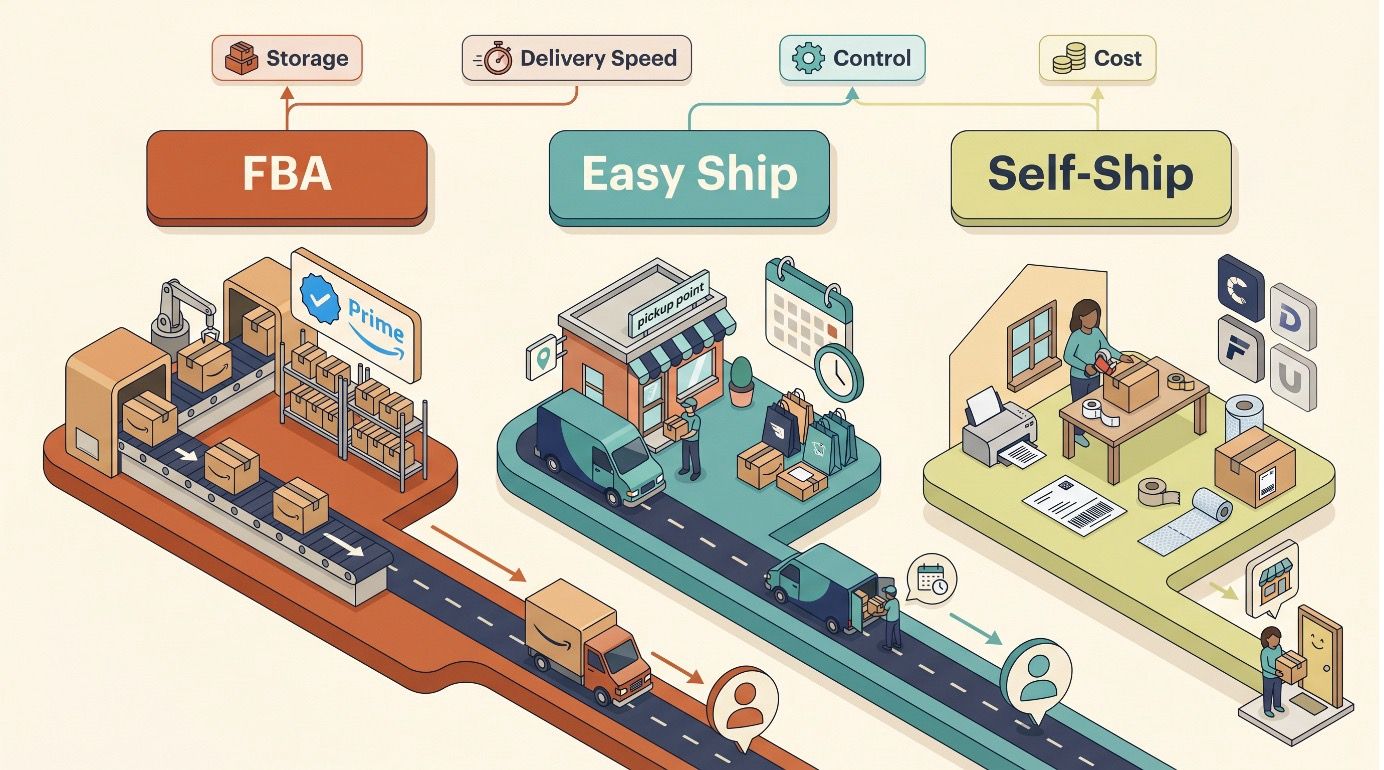
Once you have selected your products, you must decide how they will reach the customer. You have a few options:
Self-Ship: You handle the storage, packing, and courier dispatch entirely on your own. While this offers the most control, it strips your products of the highly coveted "Prime" badge.
Amazon Easy Ship: You store and pack the products in your own factory warehouse, and an Amazon delivery agent comes to pick them up. This is a great middle-ground for testing the waters.
Fulfillment by Amazon (FBA): You send your bulk inventory to an Amazon warehouse. They handle the storage, picking, packing, shipping, and customer returns. For a manufacturer looking to scale without building a massive internal B2C logistics team, FBA is the gold standard. It guarantees the Prime badge, which can increase your sales velocity exponentially.
The Art of the Amazon SEO: Keyword Listings
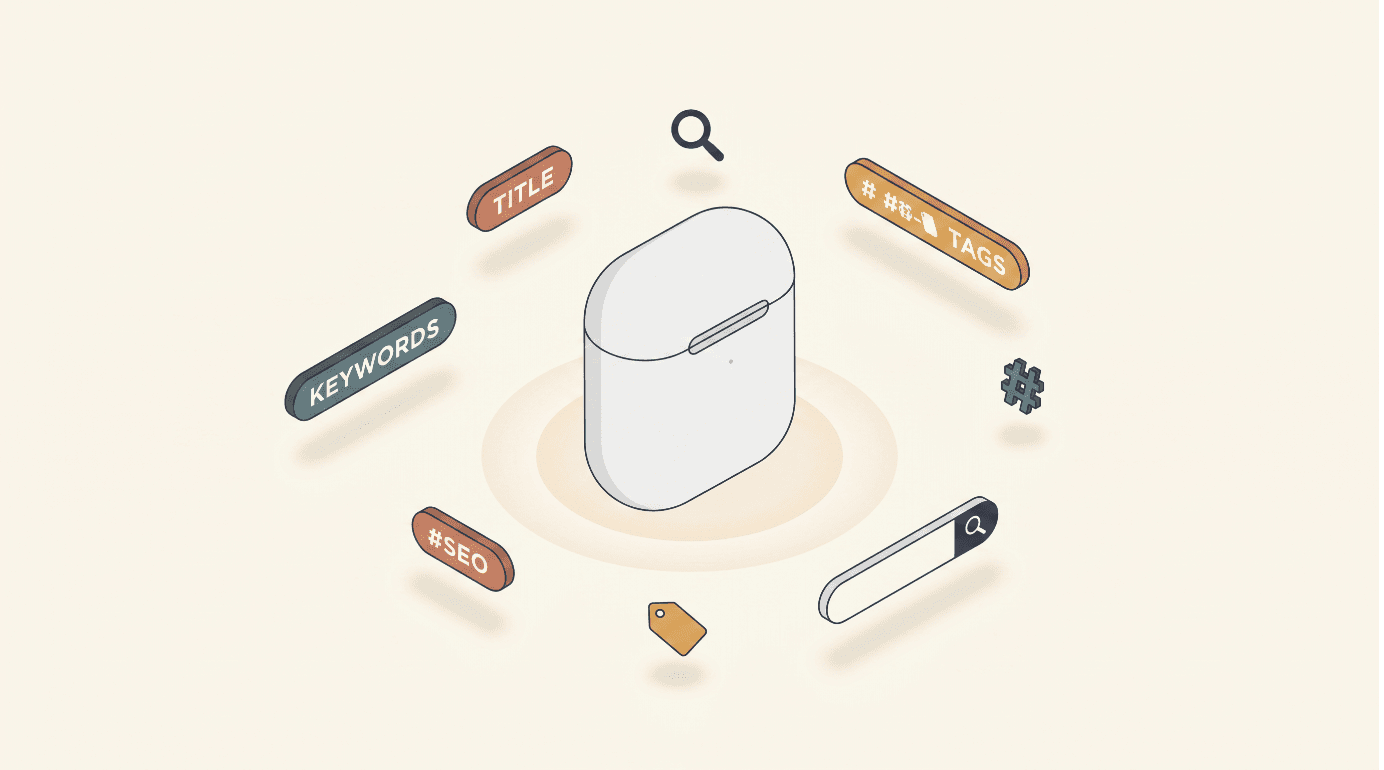
With your account registered and your products selected, it is time to build your digital storefront. This brings us to a highly critical question: How do manufacturers list products on Amazon India?
The transition from a B2B mindset to a B2C mindset requires a complete shift in how you talk about your products. In the manufacturing world, you sell based on technical specifications - materials, dimensions, tensile strength, and raw inputs. But on Amazon, consumers do not search for specifications; they search for solutions to their problems.
To succeed, you must master Amazon SEO (Search Engine Optimization) and strategic keyword listings. Amazon is, at its core, a massive search engine. If your product does not contain the exact words a customer is typing into the search bar, your product simply does not exist to them.
1. The Title: Your Digital Billboard
Your product title is the most heavily weighted SEO element on your entire listing. It should read naturally but be packed with highly relevant keywords.
The B2B Title: "Model 4A Stainless Steel Container 500ml"
The B2C Amazon Title: "Premium Stainless Steel Insulated Water Bottle | 500ml Thermos for Hot and Cold Drinks | Leak-Proof Gym and Office Flask"
Do you see the difference? The second title anticipates what the customer is actually typing into the search bar.
2. The Bullet Points: Selling the Benefit
Amazon gives you five bullet points to convince the customer to click "Add to Cart." Do not waste these on boring factory specs. Transition every feature into a tangible benefit.
If your product has double-wall vacuum insulation (the feature), explain that it keeps their morning coffee piping hot for 12 hours during a long workday (the benefit). Embed secondary keywords naturally throughout these bullet points to cast a wider net for the search algorithm.
3. Backend Search Terms: The Hidden Drivers
Amazon allows you to enter "backend keywords" - words that the customer never sees on the public page, but that the algorithm uses to categorize your product. Use this space for common misspellings, colloquial Indian terms for your product, or broader category keywords that didn't fit naturally into your title or bullet points.
Listing optimization is an ongoing, evolving process. The beauty of the digital shelf is that it is never permanent; you can constantly tweak, test, and refine your copy to see what resonates best with the Indian consumer.
Scaling with Precision: The Power of Automated Targeting
You have built a beautiful, keyword-optimized listing. Now, you need eyeballs on it.
Amazon is a highly competitive arena. You cannot simply list a product, sit back, and wait for the sales to roll in. To generate initial momentum and climb the organic search rankings, you must leverage Amazon PPC (Pay-Per-Click) advertising.
For a manufacturer new to e-commerce advertising, the concept of bidding on keywords can feel overwhelming. Thankfully, Amazon offers a highly sophisticated tool to bridge this gap: Automated Targeting.
How Automated Targeting Works
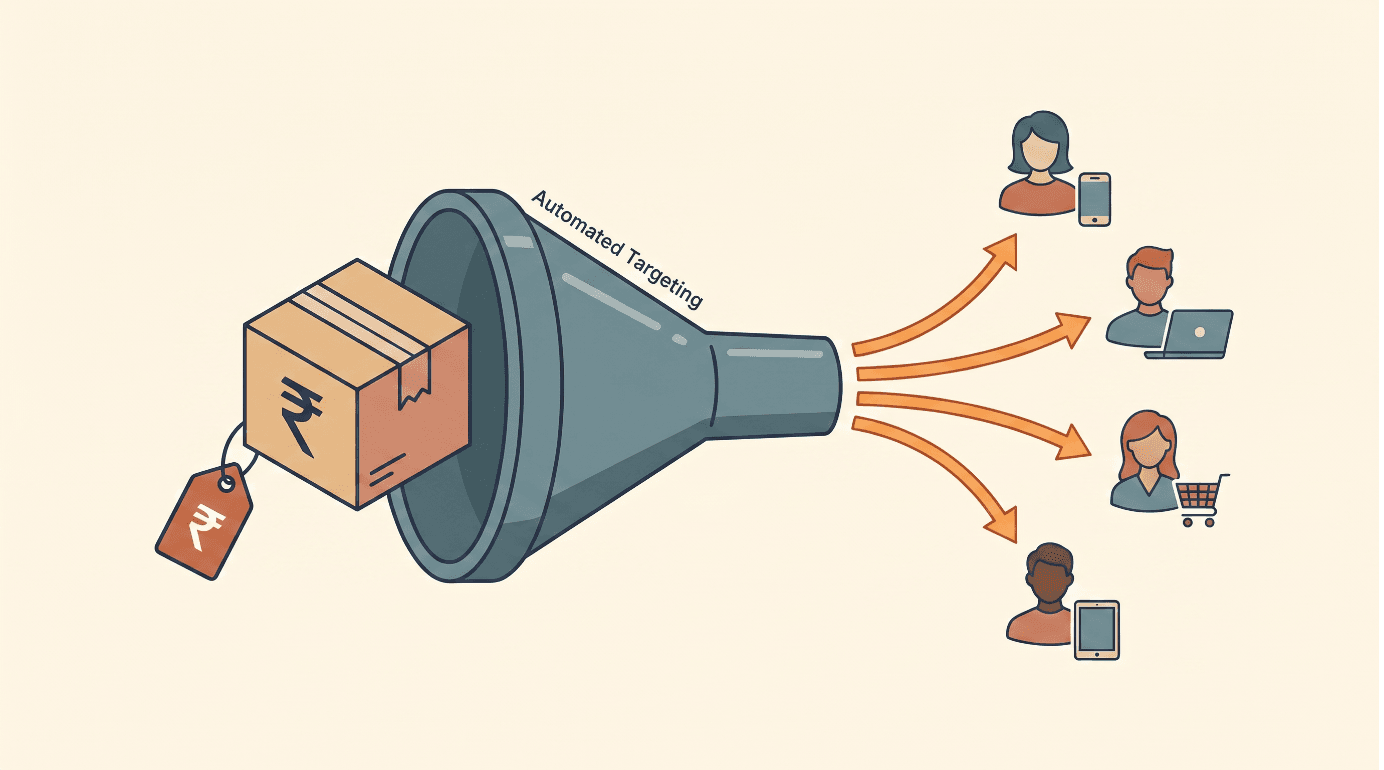
When you set up an automated advertising campaign, you do not need to guess which keywords customers are using to find products like yours. Instead, you set a daily budget, and Amazon’s algorithm uses the data from your meticulously crafted product listing (your title, bullet points, and backend search terms) to automatically display your ad to relevant shoppers.
The algorithm tests your product against thousands of different search queries and competitor pages. It operates 24/7, learning exactly what triggers a sale.
The Harvesting Strategy
We do not recommend running automated targeting indefinitely without oversight. Instead, think of an automated campaign as an incredibly smart data-mining operation.
Let the automated campaign run for two to three weeks. Then, download the "Search Term Report" from your advertising dashboard. This report is pure gold. It will show you the exact, real-world phrases Indian consumers typed into Amazon that resulted in a purchase of your product. You might discover that people aren't calling your product a "water bottle," but are instead searching heavily for a "travel flask for office."
Once you have this data, you extract those high-performing keywords and move them into a Manual Targeting campaign. In a manual campaign, you have total control. You can increase your bids specifically on the keywords you already know are profitable, and you can lower bids (or negate entirely) the keywords that are draining your budget without generating sales.
This constant cycle - using automated targeting to discover new search trends, and manual targeting to ruthlessly optimize for profitability - is the secret to controlling your ACOS (Advertising Cost of Sales) and scaling your revenue sustainably.
Final Thoughts: Taking the Leap
Stepping out of the familiar rhythms of traditional manufacturing and into the fast-paced, algorithm-driven world of e-commerce can feel daunting. But the foundational business principles remain exactly the same: create a phenomenal product, present it beautifully, and solve a genuine problem for the end user.
The transition from a factory floor to a digital powerhouse doesn't have to happen overnight. By treating your Amazon launch as a structured project - building a bulletproof Check Repository, making smart product decisions, crafting keyword-rich listings, and leveraging automated targeting - you mitigate the risks and maximize the upside.
The best consumer brands of tomorrow are the manufacturers of today who finally decide to own their distribution. You already have the products. You already have the infrastructure. Now, you have the playbook.
It is time to log in, optimize, and claim your share of the digital shelf. Happy selling.
Frequently Asked Questions
Yes, Amazon enables manufacturers to sell directly to consumers, removing multiple intermediaries and improving profit margins. It also helps build a recognizable brand rather than remaining an invisible supplier. Additionally, access to customer feedback and search data allows faster product improvement and demand alignment.
You need GSTIN, business PAN, a registered business bank account, and a valid email ID to create a seller account. Depending on your category, certifications like FSSAI, ISO, or lab reports may also be required. Trademark registration (or application) is strongly recommended for brand protection.
Brand Registry gives manufacturers control over their listings and protects against counterfeiters or listing hijacking. It also unlocks premium features like A+ Content and advanced advertising tools. This is essential for building long-term brand equity on Amazon.
No, launching too many SKUs at once can dilute focus and increase operational complexity. Start with a few high-potential “Hero SKUs” that are in demand, easy to ship, and profitable. Once you gain traction, you can gradually expand your catalog.
Fulfillment by Amazon (FBA) is typically the best choice for scaling, as Amazon manages storage, delivery, and returns. It also gives your products the Prime badge, which boosts conversions. Easy Ship is a good intermediate step if you want to retain some control initially.
Amazon SEO is crucial because it determines whether your product appears in search results. Optimized titles, bullet points, and backend keywords help match customer search intent. A well-optimized listing significantly increases both visibility and conversion rates.
Automated targeting allows Amazon’s algorithm to show your ads based on your product listing data. It helps discover high-performing keywords and customer search patterns without manual input. These insights can later be used to build more efficient manual campaigns.
Initial traction usually takes a few weeks, especially if supported by advertising and optimized listings. Early momentum depends on product demand, pricing, and reviews. Consistent optimization and ad spend are key to scaling beyond the initial phase.